Tessuto e Grammatura
Fabric & Weight Method
Every figure on a product page comes from somewhere. This page is where it comes from: what we measure, on what, how many times, and what the number does not tell you.
Last updated 15 August 2026/Governed by Italian law
1. Why numbers, not adjectives
A heavyweight sweatshirt is a simple object and almost every difference that matters is settled before it is cut. Yet the words used to sell one are almost always adjectives: cosy, premium, substantial, soft. Those words are unfalsifiable, which is exactly why they get used.
Three measurements decide whether you keep reaching for a garment: what the cloth weighs, which side has been cut open, and how much it moves in the first wash. All three are on every product page on this site. A product missing any of them cannot be published here at all, and that is enforced by a check that runs before the site builds, not by good intentions.
2. Fabric weight
Weight is given in grams per square metre (g/m²), rounded to the nearest ten. It is measured on finished cloth, after dyeing and finishing, using a circular cutter of known area on samples taken from three separate points across the roll. We publish the mean.
We do not quote the mill’s specification. Greige cloth and finished cloth are not the same weight, and the gap between them is the oldest way to make a garment sound heavier than it is.
| Rung | Thickness | Faces cut | What it is for |
|---|---|---|---|
| 280 g/m² | 1.6 mm | Loopback | Indoors with the air conditioning on, or under another layer in spring and autumn. |
| 340 g/m² | 2.1 mm | Loopback, Brushed fleece | The weight most people wear more days of the year than any other. |
| 400 g/m² | 2.6 mm | Loopback, Brushed fleece | Worn alone down to roughly five degrees above freezing. |
| 480 g/m² | 3.2 mm | Loopback | Outdoors in winter with nothing over it. Indoors you will get warm. |
| 520 g/m² | 3.7 mm | Loopback | Only for cold outdoors, worn alone. For ordinary days it is too much cloth. |
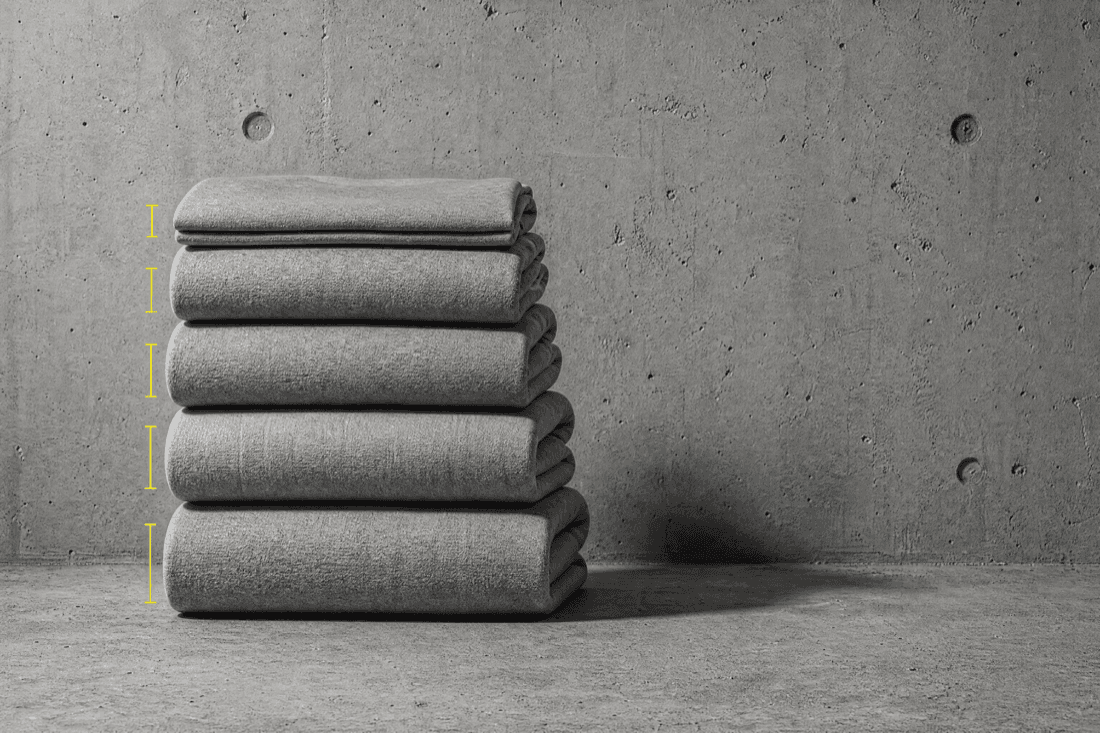
Thickness in millimetres is measured on a folded edge under light pressure and is given as an aid to imagination, not as a specification. Weight is the specification.
3. Knit face
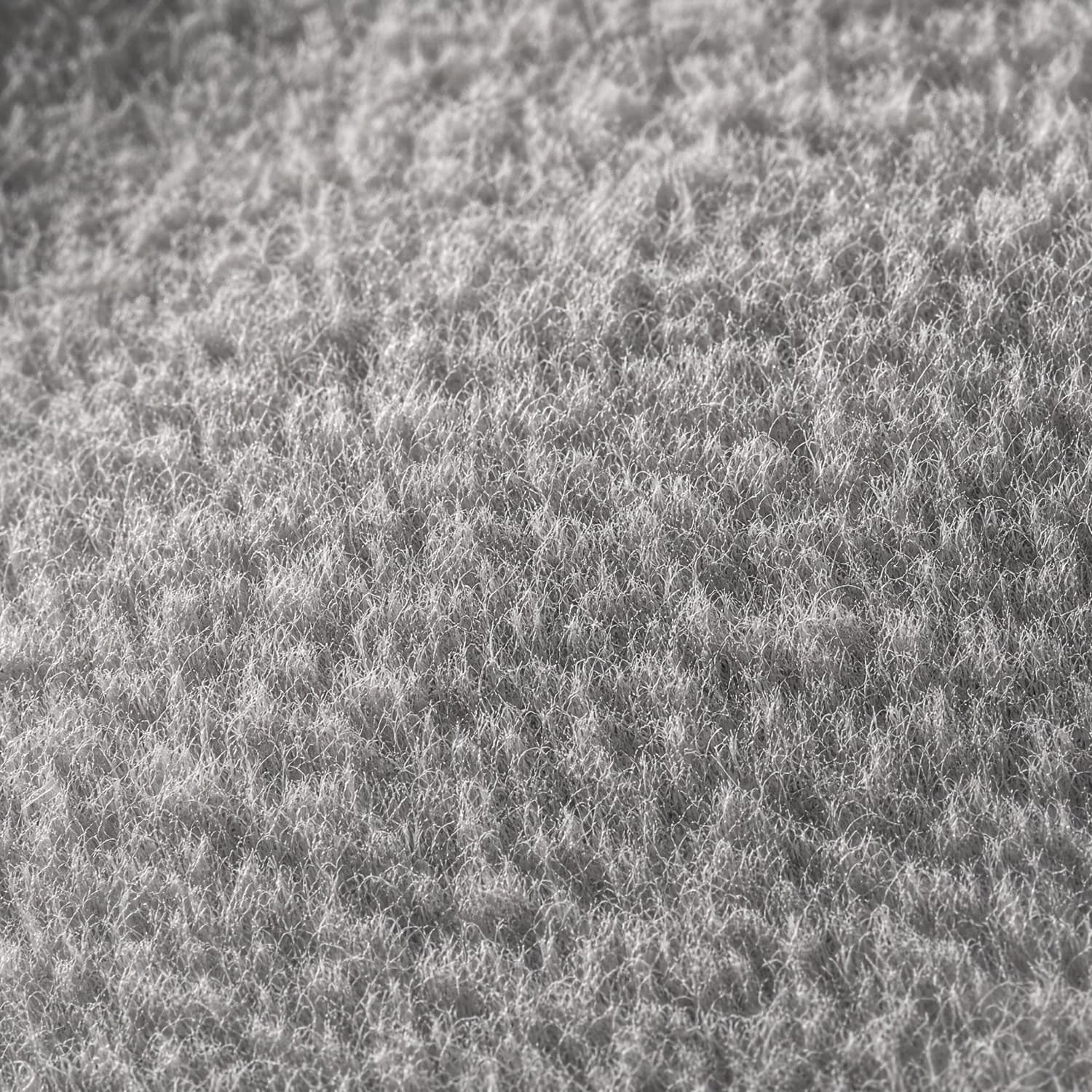
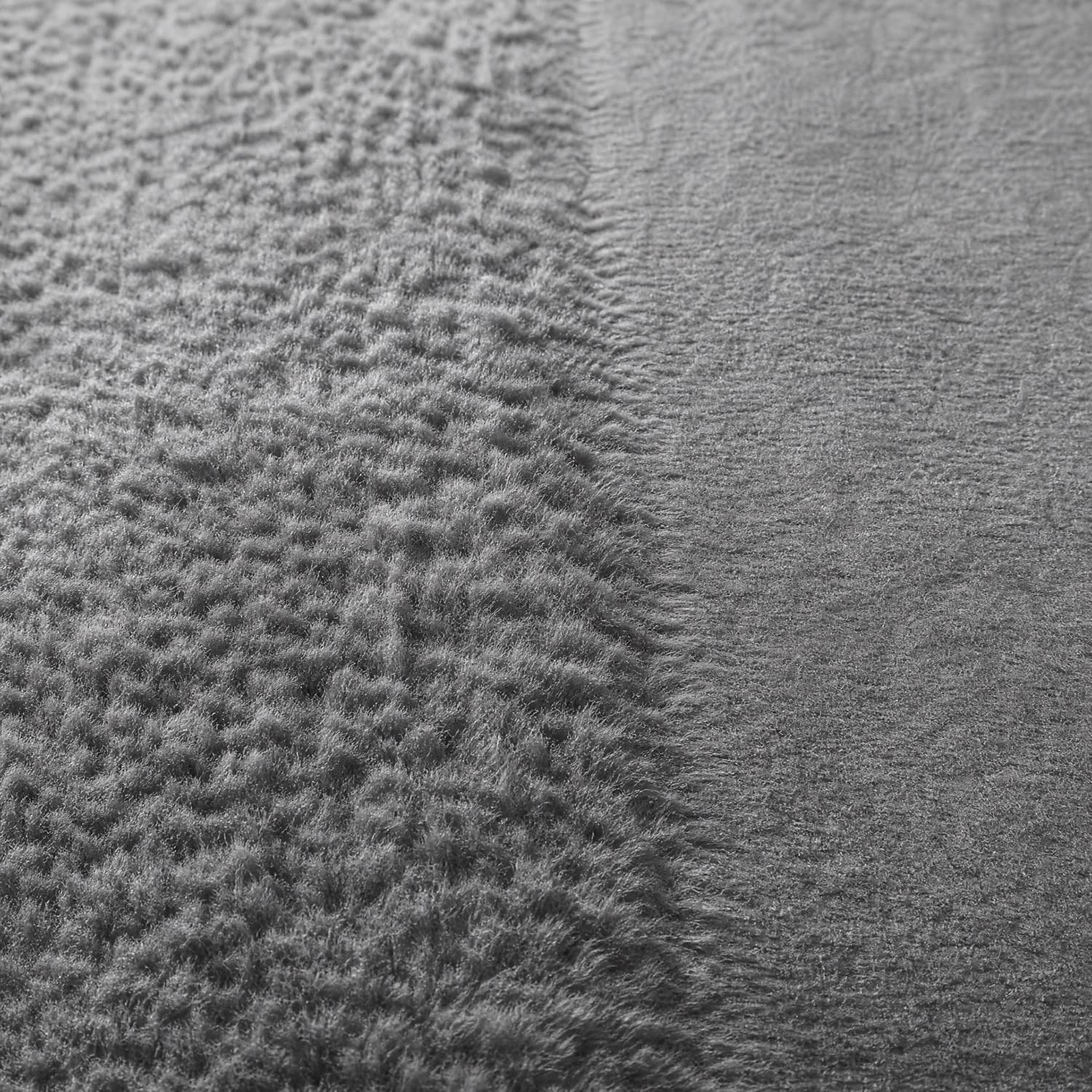
The inside of sweatshirt cloth is finished in one of two ways, and the two wear nothing alike. We never use a word that covers both.
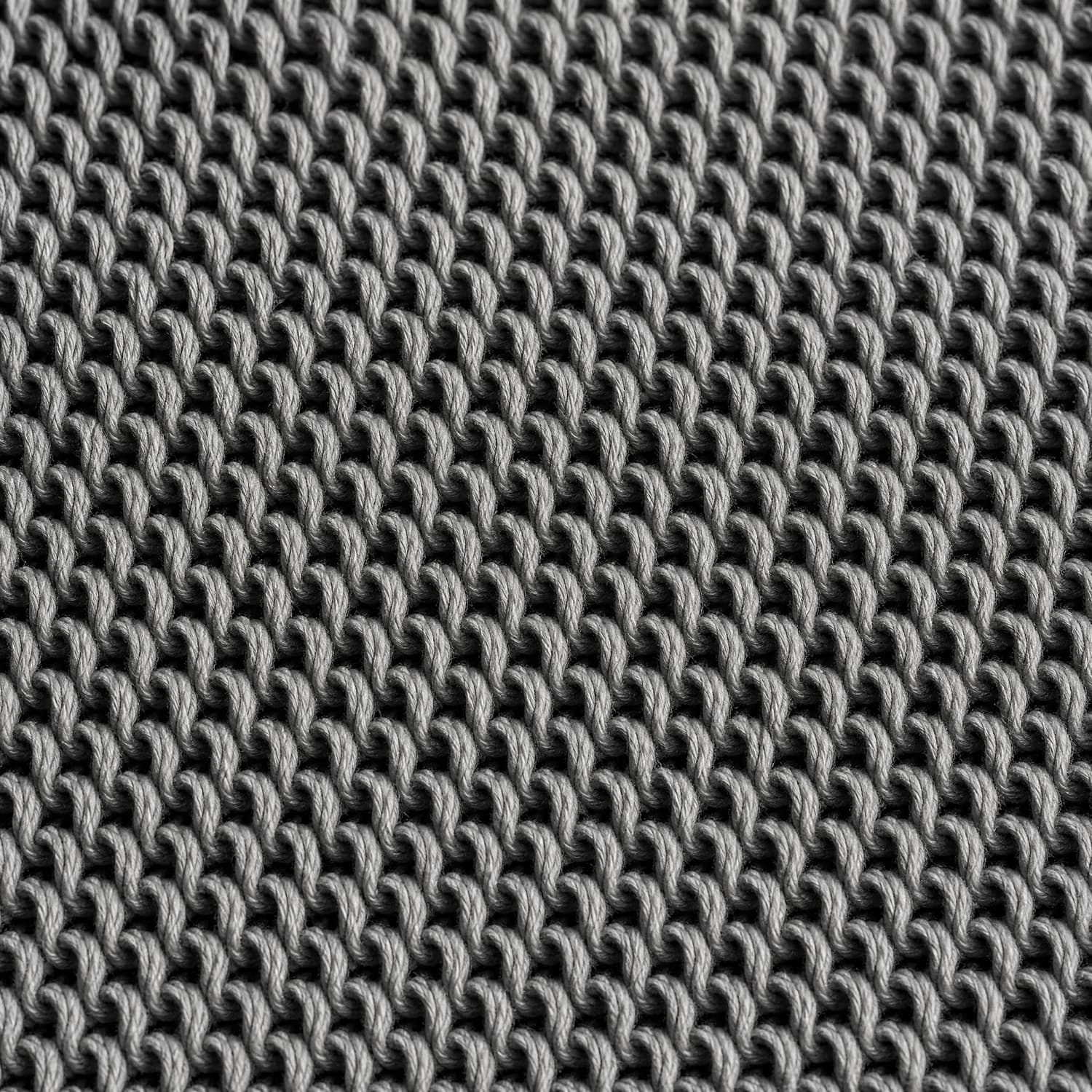
- Loopback leaves the inside as unbroken loops. Nothing is cut, so there is less loose fibre to migrate and form pills, and the surface stays flat for years. Against the skin it reads cooler in the first moments, because there is no trapped air layer.
- Brushed fleece passes the cloth under wire rollers that cut the loops and lift the fibre. That pile traps air, which you feel immediately as warmth. Over months of wear the pile lies down.
Neither is better. They wear differently. That sentence appears on every product page on this site, and it is the honest answer. Two rungs, 340 and 400, are cut in both faces from the same pattern so that the only variable between the two garments is the one you are trying to judge.
4. Shrinkage
Cotton knit moves in the first wash. Anyone claiming otherwise is either pre-shrinking heavily, which changes the hand of the cloth, or not measuring.
We mark a one-metre square on finished cloth, run one full cycle at the temperature published on the product page, dry it the way the product page says, condition it flat for 24 hours, and measure again. Length and width are reported separately, because knit moves far more along one axis than the other. Three samples per fabric; we publish the mean, rounded to one decimal.
| Fabric | Length | Width | Conditions |
|---|---|---|---|
| 280 loopback | -3.0% | -1.5% | 30 °C, line dried flat, measured after one full cycle |
| 340 loopback | -3.5% | -2.0% | 30 °C, line dried flat, measured after one full cycle |
| 340 brushed | -4.0% | -2.5% | 30 °C, line dried flat, measured after one full cycle |
| 400 loopback | -3.5% | -2.0% | 30 °C, line dried flat, measured after one full cycle |
| 400 brushed | -4.5% | -2.5% | 30 °C, line dried flat, measured after one full cycle |
| 480 loopback | -4.0% | -2.5% | 30 °C, line dried flat, measured after one full cycle |
| 520 loopback | -4.5% | -3.0% | 30 °C, line dried flat, measured after one full cycle |
Note that brushed fabrics move more than loopback at the same weight, and that heavier cloth moves more than lighter cloth. Both are real and neither is flattering, which is why they are printed rather than averaged away into one number for the whole range.
5. The two size charts
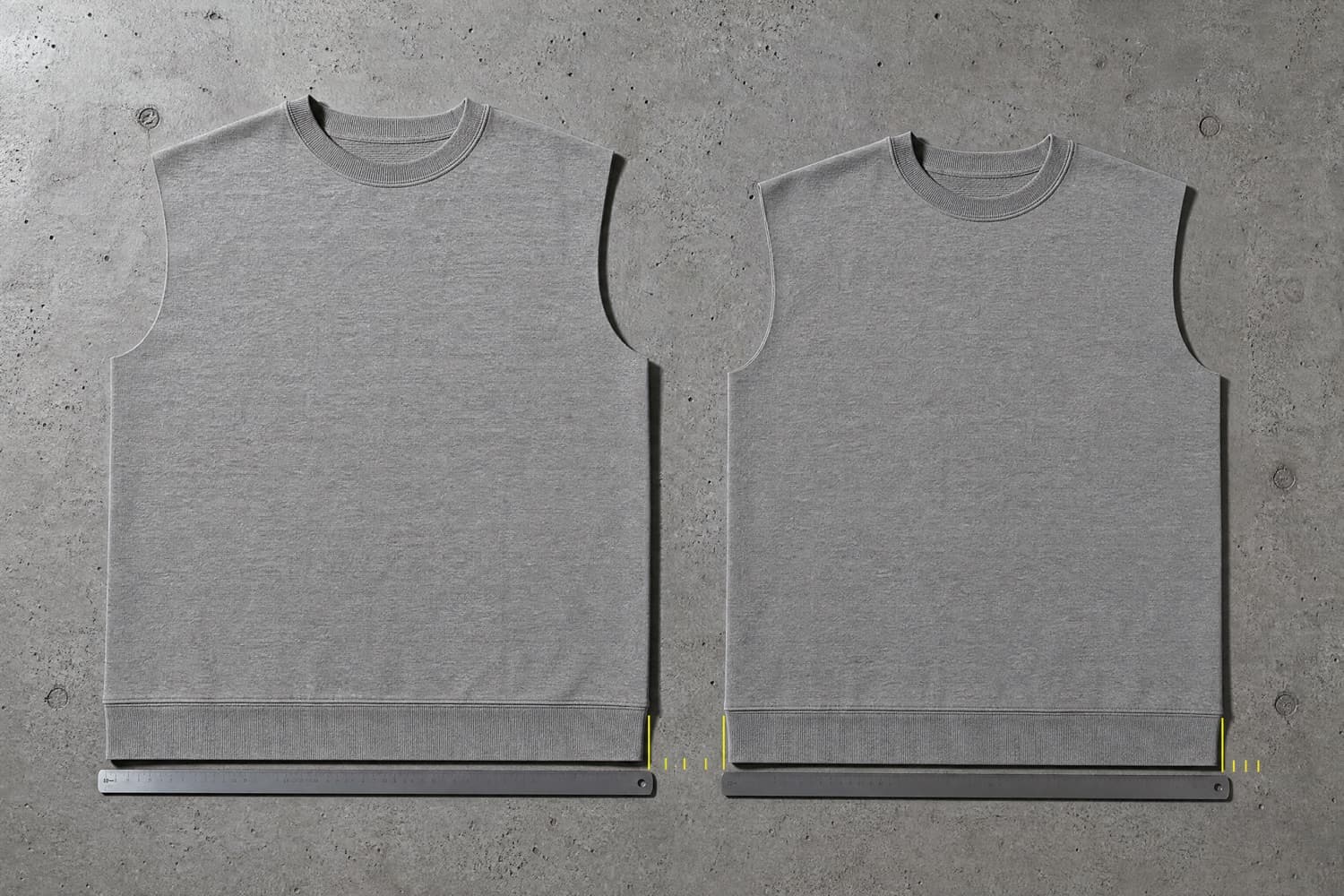
Every product page carries two size charts. The first is the garment as delivered. The second is that same garment with the measured shrinkage applied along each axis: length figures reduced by the length percentage, girth figures by the width percentage.
Read the second one. It is the garment you will own from the first wash onward, for the rest of its life. Publishing only the first table is publishing the wrong table, and it is the single most common way a sweatshirt disappoints someone.
All measurements are taken flat, in centimetres, on the garment rather than on a body. Our fit model is 183 cm and the size worn is stated on every page.
6. Pilling
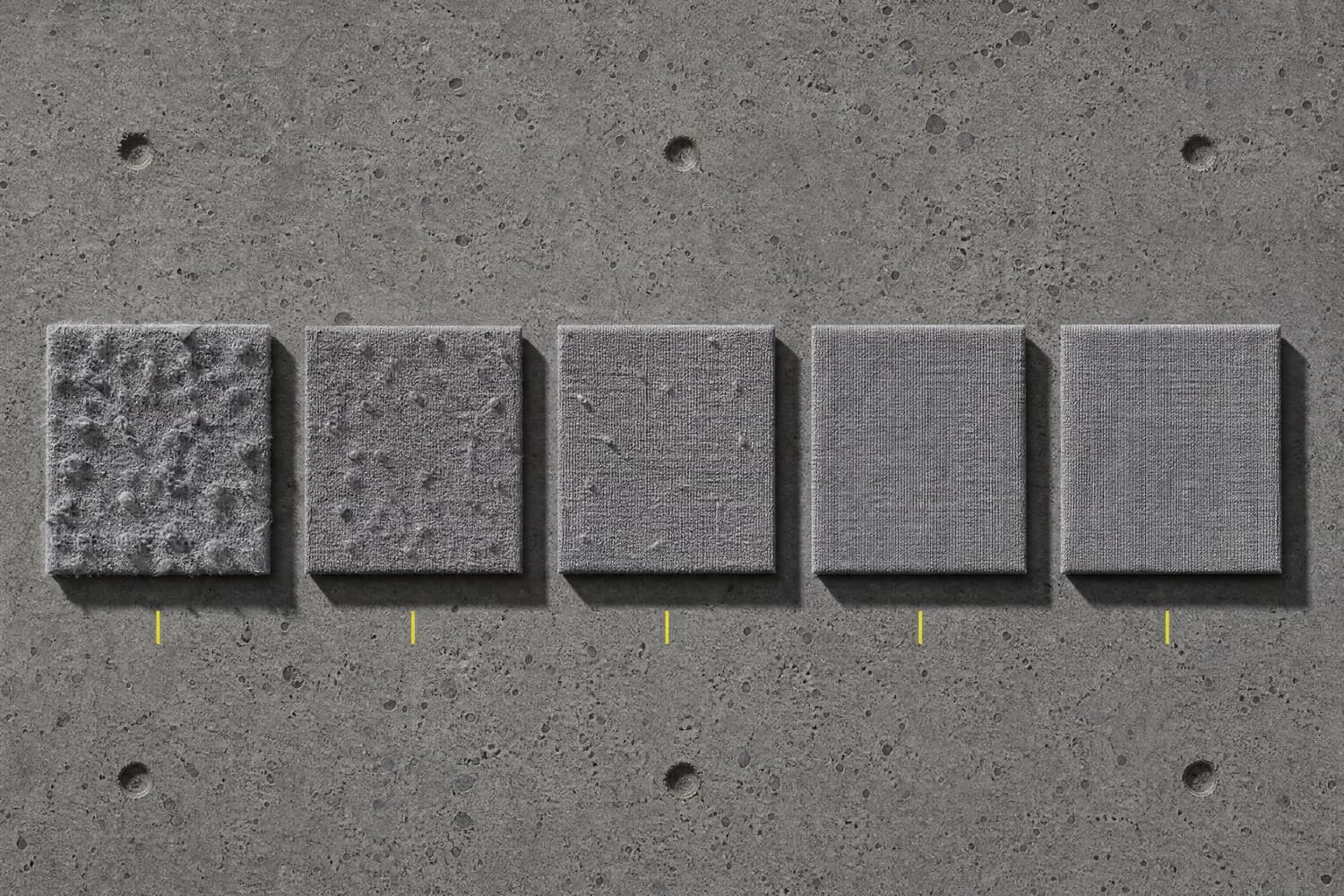
Pilling is tested to ISO 12945-2 on a Martindale machine at 2 000 rubs, and assessed against the standard photographic scale from 1, heavily pilled, to 5, unchanged.
| Knit face | Grade | Method |
|---|---|---|
| Loopback | Grade 4 to 5 | ISO 12945-2 Martindale, 2 000 rubs, assessed against the standard photographic scale |
| Brushed fleece | Grade 3 to 4 | ISO 12945-2 Martindale, 2 000 rubs, assessed against the standard photographic scale |
A grade is never published on this site without the method beside it. A pilling grade with no test method attached is a number with nothing behind it, and where we do not have the method we do not render the row.
7. Tolerances
Cloth is manufactured, so it varies. These are the tolerances within which a delivered garment still matches what we published. Outside them, it does not conform and your rights under the legal guarantee apply.
| Figure | Tolerance |
|---|---|
| Fabric weight | ± 5% |
| Garment measurements | ± 1.5 cm on girth, ± 1.0 cm on length |
| Shrinkage | ± 1.0 percentage point |
| Pilling | Half a grade |
8. Origin
Every product page carries two origin lines, because a garment has two origins and conflating them is how the word “made” gets stretched:
- Where the fabric was knitted, which is where the yarn became cloth.
- Where the garment was cut and sewn, which is where the cloth became a sweatshirt.
Both are mandatory. A product cannot be listed with one and not the other. We make no claim of origin beyond these two statements, and we use no flag, map, place name or colour arrangement anywhere on this site or on any garment to imply one.
9. Cords and safety
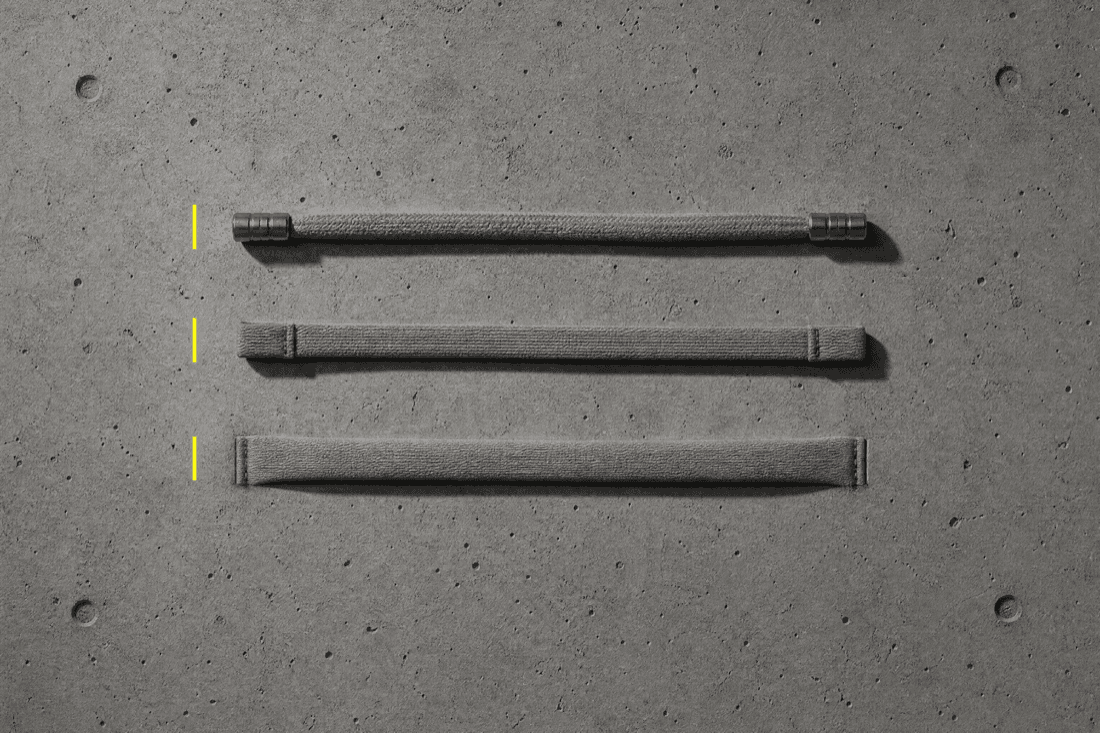
Where a garment has a cord, its type is stated on the product page. We build them in three ways, all of which are designed so the cord cannot be drawn out of its channel:
| Type | How it is built |
|---|---|
| Cord with metal stoppers | The hood cord runs through two metal stoppers that are crimped onto the cord ends, so it cannot be pulled out of the channel in a wash. |
| Cord with closed ends | Both ends of the waist cord are bar-tacked closed against the eyelet, so the cord cannot be drawn out of the channel. |
| Internal cord, no free ends | The waist cord sits fully inside the channel and is stitched down at the centre back. Nothing hangs loose outside the garment. |
We do not cut sizes for children under 14. EN 14682 prohibits cords at the neck and hood of children’s garments, and restricts them elsewhere. Rather than build a childrenswear line to that standard, we simply do not make one. If that ever changes, the standard will be met in full before anything is offered, and this page will say so.
10. What makes a set a set
A set is sold as one product only where the top and the bottom match on all three of the following:
- The same fabric weight
- The same knit face
- The same colour, from the same dye lot
If any one of the three does not match, it is not sold here as a set and it is not named as one. Two greys from different dye lots are two different greys, and you will see it the first time you wear them together in daylight.
For the same reason, the pairing suggestions on a product page only ever show bottoms at the same weight and the same face. We will not cross-sell you a 340 top with a 480 leg.
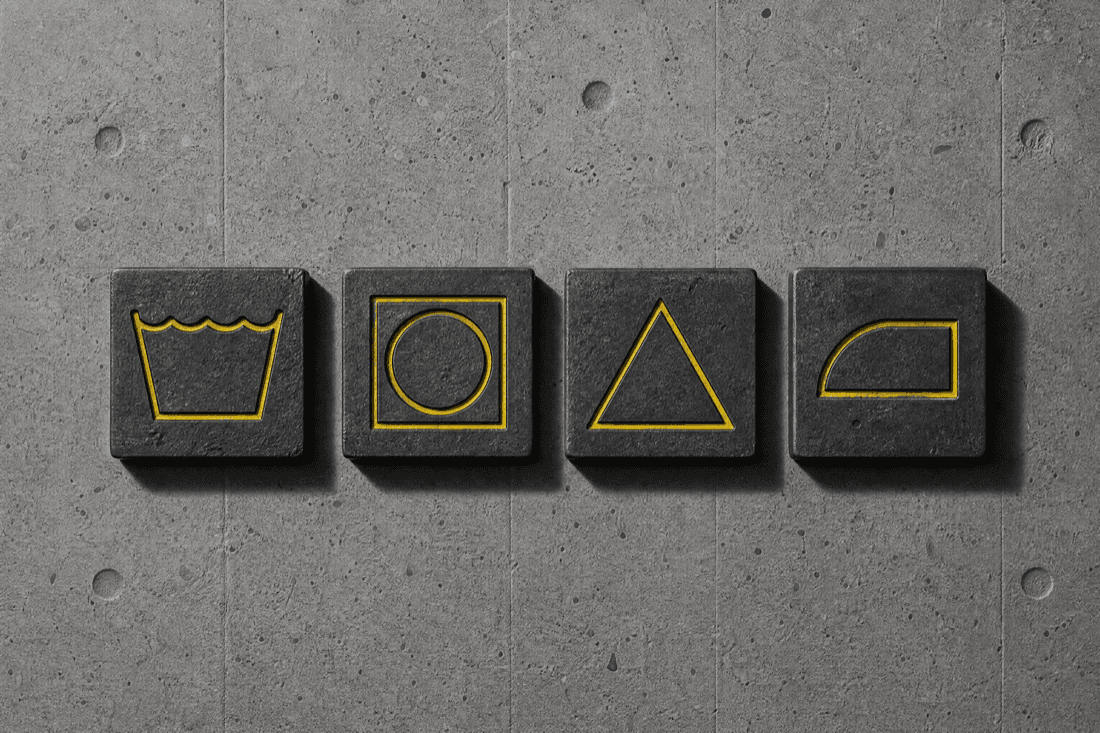
11. Care
Care instructions on this site are short because most of what extends the life of a heavyweight knit is short: wash it cold, wash it less often than you think, and do not tumble it.
- Wash at the temperature printed on the product page, inside out.
- Do not tumble dry. Heat is what drives the second and third round of shrinkage, long after the first wash you were expecting.
- On brushed fleece specifically: tumble drying accelerates the flattening of the pile. This warning is printed on every brushed product page, not hidden here.
- Warm iron on the outside face only. Pressing the rib flat destroys its recovery, and it does not come back.
12. Where this can be wrong
A method page that only lists strengths is marketing. These are the real limits of what is published here:
- Three samples is three samples. Our figures are means from a small number of measurements per fabric, not from continuous production monitoring. A roll can fall outside them.
- Your machine is not our machine. Shrinkage is measured under one set of conditions. A hotter wash, a longer spin or a tumble dryer will move a garment further than the published figure, and that is not a defect in the cloth.
- Pilling is tested, not lived. Two thousand rubs on a Martindale is a comparison between fabrics. It is not a prediction of what a rucksack strap will do over one winter.
- Thickness in millimetres is soft data. It depends on how hard you press. Weight does not, which is why weight is the number the shop is organised around.
- Screens vary. Our greys are photographed under one consistent light. We cannot control how yours renders them.
If a garment you receive does not match what this page says it should, that is a conformity issue and we will fix it. Write to support@scmodaitalia.shop and see the legal guarantee.
Contatti: support@scmodaitalia.shop·+39 335 847 1906